Most commercial roof damage does not announce itself with a dramatic collapse or a sudden flood. It starts quietly. A small blister on the membrane here, a separated flashing seam there, a drain that takes just a little longer to clear after rain. These subtle signals are easy to miss if you are not looking for them, but catching them early is the difference between a minor repair bill and a full roof replacement.
Building owners and facility managers who know what to look for have a significant advantage. They can act before water infiltration compromises their insulation, their interior finishes, or their structural decking. This guide walks you through the most important early warning signs of commercial roof damage, why each one matters, and what to do when you spot them.
Why Early Detection Makes All the Difference
The relationship between early detection and repair costs is not complicated. The sooner you identify commercial roof damage, the less it costs to fix it. A small puncture in a membrane that is caught within weeks costs a fraction of what it costs once water has worked its way through the insulation layer and into the interior decking. Time is the variable that separates a manageable repair from a catastrophic replacement.
According to the National Roofing Contractors Association, a well-maintained commercial roof can last significantly longer than a neglected one of the same material and age. Routine visual checks, even informal ones performed by facility staff, dramatically increase the likelihood of catching problems while they are still minor. You do not need to be a roofing expert to notice that something looks wrong. You just need to know what to look for.
The consequences of delayed action go beyond repair costs. Water infiltration can trigger mold growth, compromise electrical systems, damage inventory, and disrupt operations. In some cases, undetected commercial roof damage can invalidate warranty coverage, leaving building owners responsible for costs that would otherwise have been covered. The stakes are high enough to make early detection a genuine priority.
Blistering and Bubbling on the Roof Surface
One of the earliest visible signs of commercial roof damage is blistering or bubbling on the membrane surface. These raised areas form when air or moisture becomes trapped between layers of the roofing system, most commonly between the membrane and the insulation below it. They are easy to spot during a routine visual inspection and should never be ignored.
Blisters are a warning that the bond between roofing layers has been compromised. Over time, foot traffic, thermal expansion, and weather cycling will cause those blisters to rupture, creating open pathways for water to enter the system. A blister that is caught before it breaks is relatively inexpensive to address. One that has been allowed to rupture and allow moisture infiltration is a much larger problem.
If you spot blistering during a roof walkthrough, document the location and size of each affected area and contact a commercial roofing professional promptly. Do not attempt to puncture or press down on blisters yourself, as this can force moisture deeper into the system and accelerate the damage.
Pooling or Ponding Water After Rain
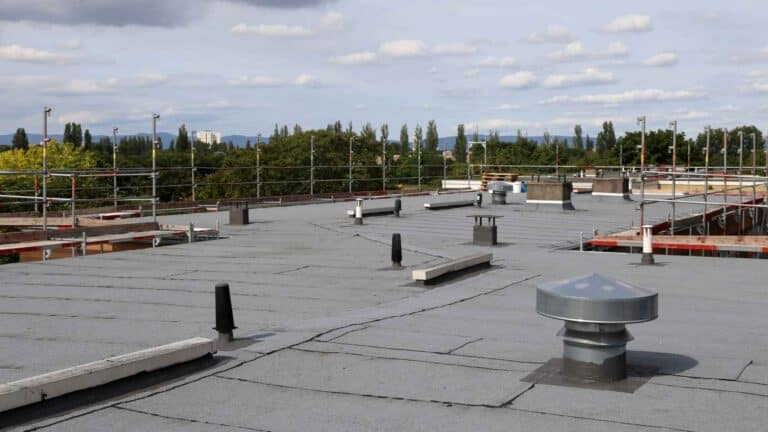
Flat and low-slope commercial roofs are particularly vulnerable to ponding water, which is defined as water that remains on the roof surface for more than 48 hours after rainfall. Any standing water you notice during or after a storm is a warning sign worth taking seriously. Chronic ponding is one of the most consistent predictors of accelerated commercial roof damage.
The weight of standing water places continuous stress on the roof deck, and the prolonged exposure degrades membrane materials, promotes algae and biological growth, and eventually leads to seam failures. Even a shallow pool of water, if it sits in the same location after every rain event, signals a drainage problem that needs professional attention.
Ponding is often caused by clogged drains, structural settling, or inadequate slope design. A commercial roofing inspector can determine the underlying cause and recommend whether the fix requires a simple drain cleaning, additional drainage points, or a more comprehensive tapered insulation solution. The important thing is not to let it go unaddressed season after season.
Damaged or Separated Flashing
Flashing is the metal or membrane material used to seal the edges, corners, penetrations, and transitions on a commercial roof. It is also one of the most common points of failure in any roofing system. When flashing separates, cracks, or pulls away from the surface it was sealed against, it creates a direct pathway for water to enter the building. Flashing-related commercial roof damage is responsible for a significant portion of all leak-related repairs.
Signs of flashing failure are usually visible without getting on the roof. Look for rust staining along the exterior walls near roofline transitions, water stains on interior ceilings near exterior walls, or visible gaps around roof penetrations like pipes, vents, and HVAC curbs. Any of these patterns strongly suggests that flashing integrity has been compromised somewhere above.
Flashing repairs, when caught early, are among the least expensive fixes in commercial roofing. But the same failure that costs a few hundred dollars to reseal can cost tens of thousands if the water intrusion it causes is allowed to saturate insulation and damage structural components over an extended period. Early action is everything here.
Interior Water Stains and Ceiling Damage
By the time a water stain appears on your ceiling, the commercial roof damage causing it has usually been developing for some time. Water typically travels from its entry point before dripping, which means the visible stain inside the building may not directly correspond to where the breach in the roof is located. This makes interior staining one of the more deceptive warning signs to interpret on your own.
That said, interior staining is still an important signal that should trigger an immediate professional inspection. Even if the leak appears minor or intermittent, the fact that water has reached the interior means it has already passed through the membrane, insulation, and potentially the decking above. The visible damage inside is just the end of a longer journey that started on your roof.
Bubbling or peeling paint on interior walls near the roofline, sagging ceiling tiles, and musty odors in upper-floor spaces are all variations of this same warning sign. Each one indicates moisture intrusion that should be investigated and stopped as quickly as possible to prevent mold growth and structural deterioration.
Cracks, Splits, and Membrane Punctures
Commercial roofing membranes are designed to be durable, but they are not indestructible. UV exposure causes materials to become brittle over time, and thermal cycling, the repeated expansion and contraction that happens as temperatures change, gradually stresses seams and field areas. Cracks and splits in the membrane surface are a direct form of commercial roof damage that should be treated as urgent.
Punctures are a separate but equally important concern. Foot traffic from service personnel, fallen debris, and hail impact can all create small holes in membrane materials that are not visible from a distance. These punctures may be no larger than a pencil tip, but are more than large enough to allow water entry during rainfall. Regular close-up inspections are the only reliable way to catch them.
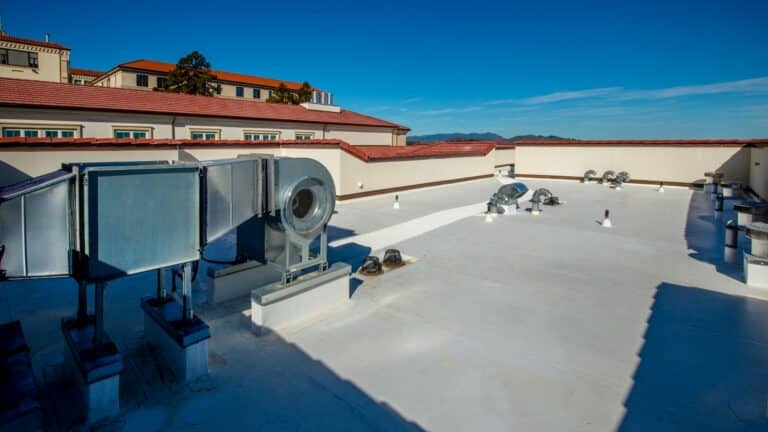
When conducting or arranging a roof walkthrough, pay particular attention to areas around penetrations, along the parapet walls, and in zones where roof-mounted equipment creates concentrated foot traffic. These are the highest-risk areas for membrane compromise and the most likely places to find early-stage damage before it progresses.
Sudden Spikes in Energy Costs
Not all early warning signs of commercial roof damage are visible. One of the less obvious but highly telling indicators is a sudden or unexplained increase in your building’s heating or cooling costs. When roofing insulation becomes saturated with moisture, it loses a significant portion of its thermal resistance. Your HVAC system then has to work harder to maintain indoor temperature, and your energy bills reflect that added load.
If you notice a pattern of rising utility costs that cannot be explained by changes in occupancy, weather, or equipment, it is worth having your roof inspected for moisture infiltration in the insulation layer. Wet insulation is not always obvious from the surface, but it represents significant ongoing energy loss and structural risk. Infrared thermal imaging, offered by many commercial roofing contractors, is an effective non-invasive tool for detecting moisture-laden insulation before visible symptoms appear.
The U.S. Department of Energy notes that damaged or degraded insulation can substantially reduce a building’s energy efficiency. Connecting that energy data to a possible roofing issue gives you a financial justification for investing in an inspection, even when no visible damage has been detected yet.
What to Do When You Spot These Warning Signs
The most important thing you can do when you notice any of these warning signs is to act without delay. Document what you have found with photos, note the location and approximate size of any visible issues, and contact a qualified commercial roofing professional to schedule an inspection. The documentation you create protects you during insurance claims and gives your contractor a useful starting point.
Avoid the temptation to attempt repairs yourself unless you have direct experience with commercial roofing systems. Amateur repairs often mask underlying problems without solving them, and they can create new vulnerabilities in adjacent areas of the membrane. Commercial roof damage that has been improperly patched is often more complicated and expensive to address correctly than the original issue would have been.
The goal is not just to stop the current problem but to understand what caused it. A thorough professional inspection will identify not only the active damage but also the conditions that contributed to it, giving you the information you need to prevent the same issue from recurring. That kind of root-cause clarity is what separates a lasting fix from a temporary one.
Let’s Take a Closer Look at Your Roof Together
If any of the warning signs in this article sound familiar, your roof may already be telling you something important. Commercial roof damage rarely gets better on its own, and the longer it goes unaddressed, the more expensive and disruptive the eventual repair becomes. The best time to act is before a minor issue becomes a major one.
At National Roofing and Sheet Metal, we provide professional commercial roof inspections, leak repair, storm damage assessment, and full maintenance programs for commercial and industrial buildings. Our experienced team knows how to find the problems that are easy to miss and how to fix them the right way the first time. Do not wait for a small problem to become a big one. Reach out to our team today and let us schedule an inspection that gives you the answers you need.