Michigan winters don’t go easy on commercial roofs. Between heavy snow loads, ice buildup, and repeated freeze thaw cycles, a roof that made it through the year just fine can develop serious problems once the temperature drops. The good news is that most winter roofing emergencies are preventable with the right prep work done ahead of time.
Why Fall Prep Matters So Much
A lot of roofing damage that shows up in January or February actually started as a small issue back in the fall. A minor leak, a clogged drain, or a small area of ponding water might not seem urgent in September, but once snow and ice get involved, that same small issue can turn into a major structural concern or an emergency call in the middle of a storm.
Getting ahead of it now, while the weather is still cooperative, gives your roofing contractor time to actually fix problems instead of just patching things temporarily to get through the season.
Schedule a Fall Roof Inspection
This is the single most important step in winter prep. A thorough inspection before winter hits should look at the entire roofing system, not just the obvious trouble spots. That includes checking for ponding water, damaged flashing, worn membrane, and any areas where the roofing material has started to blister or separate.
Catching these issues before they’re covered in snow means repairs can actually happen. Once winter sets in, a lot of roofing work becomes difficult or impossible until temperatures warm back up, so anything found during a fall inspection has a much better chance of getting properly addressed.
Clear Drains and Gutters
Roof drains, gutters, and downspouts need to be completely clear before winter arrives. Leaves, debris, and buildup from the summer and fall months can block water flow, and once that water has nowhere to go, it sits on the roof and freezes. Standing water that freezes adds significant weight to the roof and can lead to leaks once it eventually thaws and refreezes throughout the season.
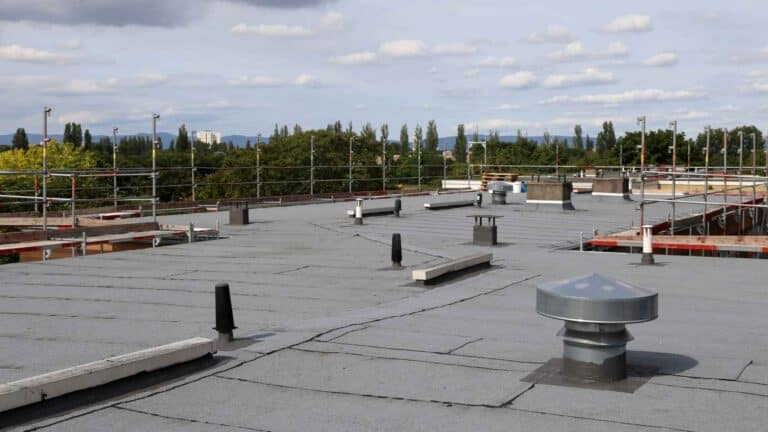
This is especially important for flat and low-slope commercial roofs, which rely heavily on proper drainage to avoid ponding issues in the first place.
Check for Ponding Water
Speaking of ponding, this is one of the most common issues facing flat commercial roofs heading into winter. Areas where water regularly collects and doesn’t drain properly are a major risk once temperatures drop, since that standing water freezes and adds stress to the roofing membrane. A fall inspection should identify any ponding areas so they can be addressed before the freeze thaw cycle has a chance to make the problem worse.
Inspect Flashing and Seals
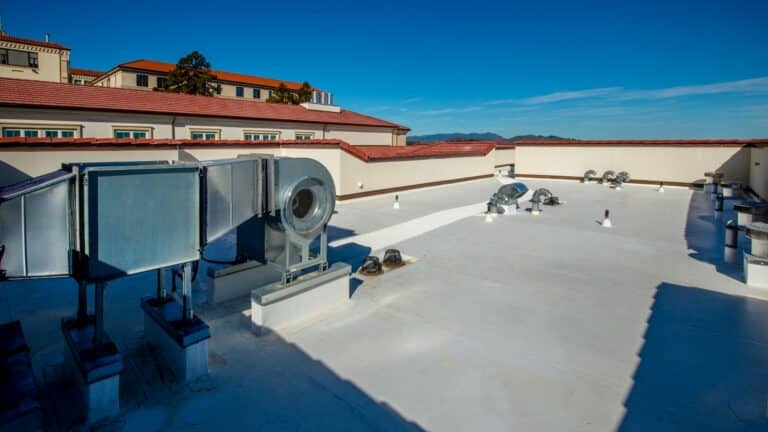
Flashing around vents, HVAC units, skylights, and roof edges is one of the most common places for leaks to develop. These areas take a lot of stress from temperature changes throughout the year, and even a small gap or worn seal can let water in. Once that water freezes and expands, a minor issue can turn into a much bigger repair.
Having a professional check every seal and flashing point before winter is one of the most effective ways to prevent leaks once the snow starts falling.
Think About Snow Load
Every commercial roof has a maximum weight it’s designed to handle, and heavy, wet snow can add up fast, especially after multiple storms without a chance to melt in between. If your building has a history of heavy snow accumulation, or if your roof is older and hasn’t been evaluated recently, it’s worth having a professional assess whether snow removal should be part of your winter plan this year.
This matters even more for large flat roofed industrial and warehouse buildings, where the sheer surface area means a lot of extra weight can build up quickly during a heavy winter.
Watch for Ice Dam Risk
Ice dams form when heat escaping from inside the building melts snow on the roof, which then refreezes at the edges where it’s colder. Over time, this creates a dam that traps water behind it, and that trapped water often finds its way inside the building. Proper insulation and ventilation play a big role in preventing this, so if ice dams have been a recurring issue at your facility, it’s worth having that evaluated as part of your winter prep.
Consider a Maintenance Program
For facility managers juggling a lot of responsibilities, staying on top of seasonal roof prep every single year can be a lot to manage alone. A structured maintenance program takes that off your plate by building regular inspections and preventative care right into the schedule, so nothing falls through the cracks heading into the toughest months of the year.
What to Do If a Problem Shows Up Mid-Winter
Even with solid prep work, winter weather is unpredictable, and leaks or storm damage can still happen. Having a roofing contractor who offers 24/7 emergency service matters a lot more once winter arrives, since a leak that goes unaddressed during a cold snap can lead to serious interior damage fast.
How National Roofing Can Help
National Roofing & Sheet Metal has been serving commercial and industrial facilities throughout lower Michigan since 1942, and we’ve seen firsthand what a rough Michigan winter can do to an unprepared roof. Our team handles fall inspections, drain and flashing checks, and any repairs needed before winter sets in.
Our Umbrella Program builds regular maintenance and inspections right into your schedule, so your roof stays protected year after year without you having to keep track of it yourself. And if something does come up once winter hits, our 24/7 leak repair team is ready to respond fast and limit the damage.
Give us a call at (810) 742-7373 or fill out the form on our website to schedule your fall inspection before the weather turns. We’re based in Burton, MI and serve commercial and industrial facilities throughout Genesee County and the surrounding region.
Frequently Asked Questions
When should we schedule our fall roof inspection?
Early fall, before the weather turns, is the best time. This gives our team enough time to actually fix any issues found, since a lot of repairs become difficult or impossible once winter sets in.
Why does ponding water become a bigger problem in winter?
Standing water that freezes adds significant weight to the roof and stresses the membrane underneath.
It also refreezes repeatedly throughout the season, which increases the risk of leaks once it eventually thaws.
What causes ice dams on a commercial roof?
Ice dams form when heat escaping from inside the building melts snow, which then refreezes at the colder roof edges. That trapped water often finds its way inside, so proper insulation and ventilation play a big role in preventing it.
Do we need to worry about snow load on a flat commercial roof?
It’s worth having evaluated, especially for older roofs or buildings with a history of heavy accumulation. Heavy, wet snow can add up fast after multiple storms, and large flat roofs are especially vulnerable to that added weight.
What should we do if a leak happens during a winter storm?
Call for emergency service right away rather than waiting. A leak left unaddressed during a cold snap can lead to serious interior damage fast, which is why having 24/7 emergency repair available matters so much once winter arrives.